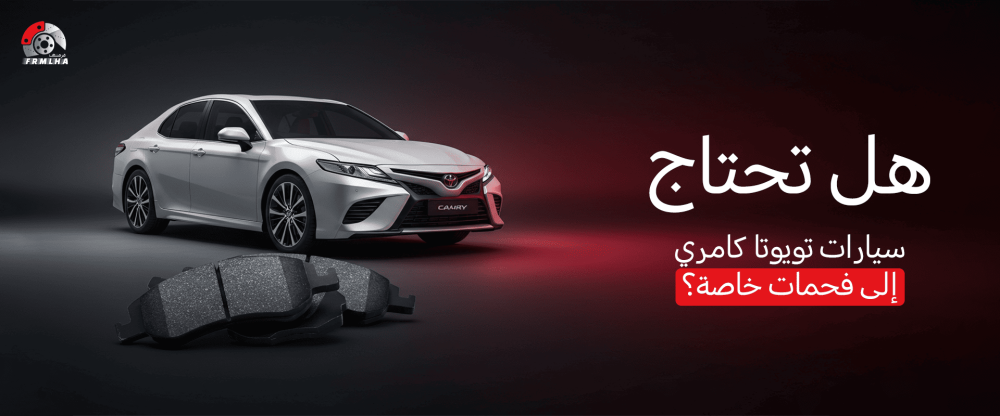

The Toyota Camry is one of the most popular and reliable cars worldwide, combining outstanding performance, comfort, and durability, making it a preferred choice for families and individuals alike. With frequent use for daily commuting and long-distance travel, brake maintenance and selecting the right brake pads are crucial for maintaining safety and optimal vehicle performance.
In this article, we will discuss in detail whether Toyota Camry cars need special brake pads, the different types of brake pads, the criteria for choosing the right brake pads, and best practices for maintaining brake performance.
Introduction to Toyota Camry cars:
1 - The history of the car and its importance in the markets
The Toyota Camry first appeared in the 1980s and quickly gained an excellent reputation among drivers worldwide. This model is characterized by its high reliability, stable performance, and excellent fuel efficiency, making it a popular choice for families and individuals looking for a mid-size car that meets all their daily needs.
2 - Reliance on brakes in daily performance
Brakes are one of the most important safety systems in any car, and they are indispensable for safe driving. Cars like the Toyota Camry, which are used daily for commuting within the city or on long highway journeys, need powerful and effective brakes to keep the driver and passengers safe.
Types of brakes and their pads:
Brakes are among the most important safety systems in any car, and their types vary depending on the design and intended use. In Toyota Camry vehicles, optimal performance depends on selecting the right brakes and pads, as any mistake in selection can affect driving safety and vehicle efficiency.
1 - Types of brakes
Disc brakes:
Disc brakes are the most common type in modern cars, including the Toyota Camry. They consist of a metal disc mounted on the wheel and a brake pad that presses against the disc when the brake pedal is pressed.
Features of disc brakes
- High ability to stop quickly even at high speeds.
- Rapid cooling reduces brake overheating during long drives or downhill descents.
- Consistent performance in humid and rainy conditions.
Disc brake disadvantages
- Its maintenance costs are higher compared to drum brakes.
- You need to regularly check the discs to make sure there are no scratches or defects that affect performance.
Drum brakes:
Some older versions of the Toyota Camry used drum brakes on the rear axle. These brakes rely on an internal drum that is pressed against internal brake levers to generate stopping power.
Features of drum brakes
- Lower manufacturing and maintenance costs.
- Suitable for light daily use or economy cars.
Drum brake defects
- Reduced cooling capacity, which may lead to decreased performance during long or intensive driving.
- Less smooth response when applying sudden pressure to the brakes.
2 - Types of brake pads
Brake pads play a vital role in brake performance, and they vary according to the materials used in their manufacture. Each type has its own characteristics that affect performance and lifespan.
Organic carbonates:
Made from natural and synthetic materials such as fiber and carbon, it is quiet and has a smooth stopping experience.
- Advantages: Smooth and quiet stopping, relatively low cost.
- Disadvantages: Relatively short lifespan, it wears out faster than other types.
- Ideal use: Daily driving within the city or regular commuting.
Mineral carbonates:
It contains metals such as iron and copper to enhance braking power and withstand high temperatures.
- Advantages: Strong and long-lasting, high heat resistant.
- Disadvantages: May make noise during braking, higher hardness on the discs.
- Ideal use: Heavy driving or long, hot roads.
Semi-metallic carbonates:
It represents a combination of organic and mineral carbonates, balancing performance and longevity.
- Advantages: Stable performance, good balance between durability and smoothness.
- Disadvantages: Some noise during braking, average cost.
- Ideal use: Moderate and balanced daily use.
Ceramic carbonates:
The latest and most advanced type of carbon, made from a high-temperature resistant ceramic blend.
- Advantages: Very quiet, long lifespan, excellent high-temperature performance, less dust production.
- Disadvantages: More expensive than other types.
- Ideal use: Intensive use, sporty driving, or long journeys.
Tips for replacing brake pads
Brake pads are among the most frequently worn parts of any car, and since the Toyota Camry is a practical vehicle used daily for both long and short journeys, timely pad replacement is essential for safety and cost reduction. Here are some practical tips to help you replace your brake pads correctly.
1 - Knowing the appropriate time for replacement
- The thickness of the carbon brushes should be checked periodically, and it is advisable to change them when they fall below 3-4 mm.
- Continuous squealing sounds when pressing the brakes are a clear sign of worn brake pads.
- An increased stopping distance compared to usual is an indication of poor brush efficiency.
- Some modern Camry models are equipped with a warning sensor that displays a light on the dashboard when the brake pads are nearing the end of their lifespan.
2 - Choosing the right carbons
- Original brake pads: These are always recommended because they are specifically designed to fit the Camry's braking systems.
- High-quality replacement brake pads: can be used if they are from well-known companies and meet Toyota specifications.
The choice of type depends on the intended use:
- Driving within cities: Organic or semi-metallic carbonates are suitable.
- Long journeys and intensive driving: Metal or ceramic brake pads are best.
3 - Use reliable service centers
- It is preferable to go to Toyota-approved service centers or specialized workshops with a good reputation.
- The technicians at the authorized centers have experience in installing brake pads and adjusting brakes accurately.
- Replacing carbon brushes in random workshops may lead to incorrect installation or the use of counterfeit parts.
4 - Check the other parts with the carbon brushes
- When changing brake pads, the brake discs (discs) should be checked to ensure there are no scratches or warping.
- Measuring the thickness of the discs is necessary; if it is less than the allowed limit, they must be replaced along with the carbon brushes.
- Check the condition of the brake fluid, and replace it if it is old or contaminated.
5 - Post-installation stage
- After installing the new brake pads, the car should be driven gently for approximately 200 km to allow time for the pads to adapt to the discs.
- Avoid sudden and forceful pressure on the brakes during this period.
- If abnormal sounds or vibrations occur, the workshop should be contacted immediately.
6 - Common mistakes to avoid
- Delaying replacement despite the appearance of signs may lead to disk damage and increased maintenance costs.
- Using unsuitable brake pads reduces the effectiveness of the braking system.
- Neglecting to check other brake components such as discs and oil can cause future problems.
Signs indicating the need to replace the brake pads in a Toyota Camry
1 - Emission of metallic squeaking or grinding sounds
One of the most prominent signs of worn brake pads is a squealing noise when applying the brakes. This noise is caused by the metal layer of the pad rubbing against the brake disc immediately after the friction layer wears down.
2 - Weak brake response and increased stopping distance
When you feel that the car needs a longer distance to stop or that the brakes no longer respond quickly, this is a clear sign that the brake pads have lost their effectiveness.
3 - Vibration of the brake pedal or shaking of the steering wheel
The driver may notice vibration in the brake pedal or shaking in the steering wheel while braking. This is often due to uneven wear on the brake pads or damage to the disc surface.
4 - Warning light illuminates on the instrument panel
Some Toyota Camry models are equipped with special brake pad sensors that alert the driver via a warning light when the pads are nearing the end of their lifespan.
5 - The car swerves when stopped
If you notice that the car veers to one side when you press the brakes, the reason is most likely that one of the brake pads is worn more than the other.
6 - Reduced thickness of carbonates
The condition of the carbon brushes can be checked visually. If the thickness is less than 3 mm, this means the brushes have reached their minimum capacity and must be replaced immediately to prevent disc damage and loss of stopping power.
7 - Appearance of a strong burning smell
If you notice a burning smell after using the brakes under normal conditions, this is an indication that the brake pads are no longer able to dissipate heat properly.
Benefits of using the right charcoal
Choosing the right brake pads for a Toyota Camry is not just a matter of routine maintenance; it is a fundamental element that directly impacts the car's performance and driving safety.
1 - Enhancing road safety
Proper brake pads provide a faster response when applying the brakes, reducing stopping distance and maintaining safe driving.
2 - Maintaining brake discs
Choosing the right carbon brushes protects the discs from scratches and rapid wear, and extends their lifespan.
3 - Improving the driving experience
Specification-compliant brake pads reduce annoying noises and vibrations, making driving more comfortable.
4 - Reducing maintenance costs
Although original brake pads are more expensive, they save money in the long run because they reduce breakdowns.
5 - Reliable performance in all conditions
Suitable carbon brushes operate efficiently in hot or cold weather and withstand frequent use.
6 - Extending the lifespan of the carbon brushes themselves
Compatible carbon brushes wear down slowly and evenly, increasing their lifespan and reducing the need for constant replacement.
Conclusion:
Brake pads are essential for maintaining the performance and driving safety of your Toyota Camry. Choosing the right type ensures precise stopping power, protects brake discs from premature wear, and provides greater comfort during everyday driving. Regular maintenance and replacing pads when signs of wear appear also helps prevent unexpected breakdowns and reduces repair costs.
Frequently Asked Questions
1- What is the expected lifespan of Toyota Camry brake pads?
It usually ranges between 30,000 and 50,000 km depending on driving style and road conditions.
2 - How do I know when the carbon brushes need to be changed?
The most prominent signs include: a squeaking sound - poor brake response - vibration of the brake pedal.
3 - What is the difference between original and counterfeit carbon brushes?
The original lasts longer and offers higher security, while the counterfeit may deteriorate quickly and damage the discs.
4 - How often should the carbon brushes be checked?
It is recommended to check it every 10,000 km or at every periodic maintenance.
5 - Does driving in traffic affect the lifespan of the brake pads?
Yes, because it causes frequent use of the brakes and therefore faster wear.
6 - Do the carbon brushes always make a squeaking sound?
Squeaking is often a sign of wear and tear, but sometimes it is caused by dust or moisture.
7 - What happens if you ignore changing the brake pads?
The brake disc may be damaged, and the car's ability to stop may be weakened, posing a significant risk.
8 - Do Camry brake pads differ depending on the model?
Yes, sizes may vary slightly between different models and years.
9 - What causes the burning smell when using the brakes?
Often due to high temperatures caused by worn-out brake pads or harsh driving.
10- What is the best type of brake pads for daily driving in Saudi Arabia?
Ceramic or semi-metallic carbons offer a balance between performance, comfort, and longevity.